


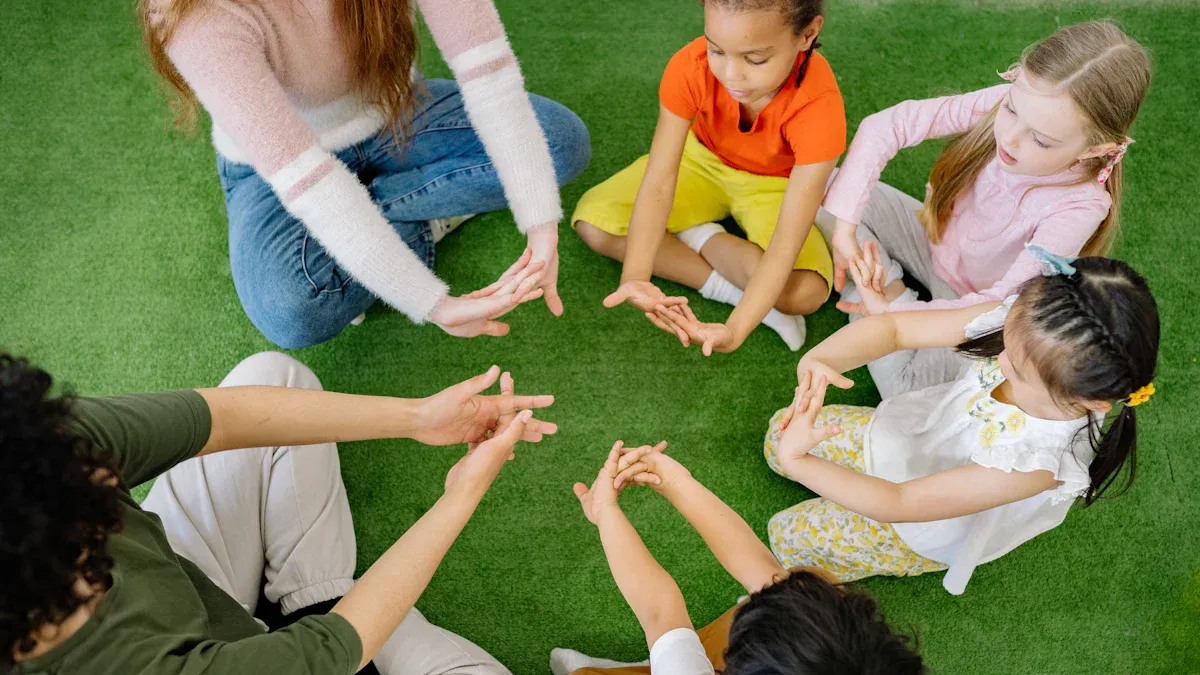
Indoor playgrounds give children a safe space to play, move, and interact. These environments help kids improve social and physical skills while staying protected from weather.
Parents trust a Soft Playground Supplier to create spaces where children can grow, explore, and develop through active play.
Physical Skills Development in Indoor Playgrounds
Enhancing Gross Motor Skills
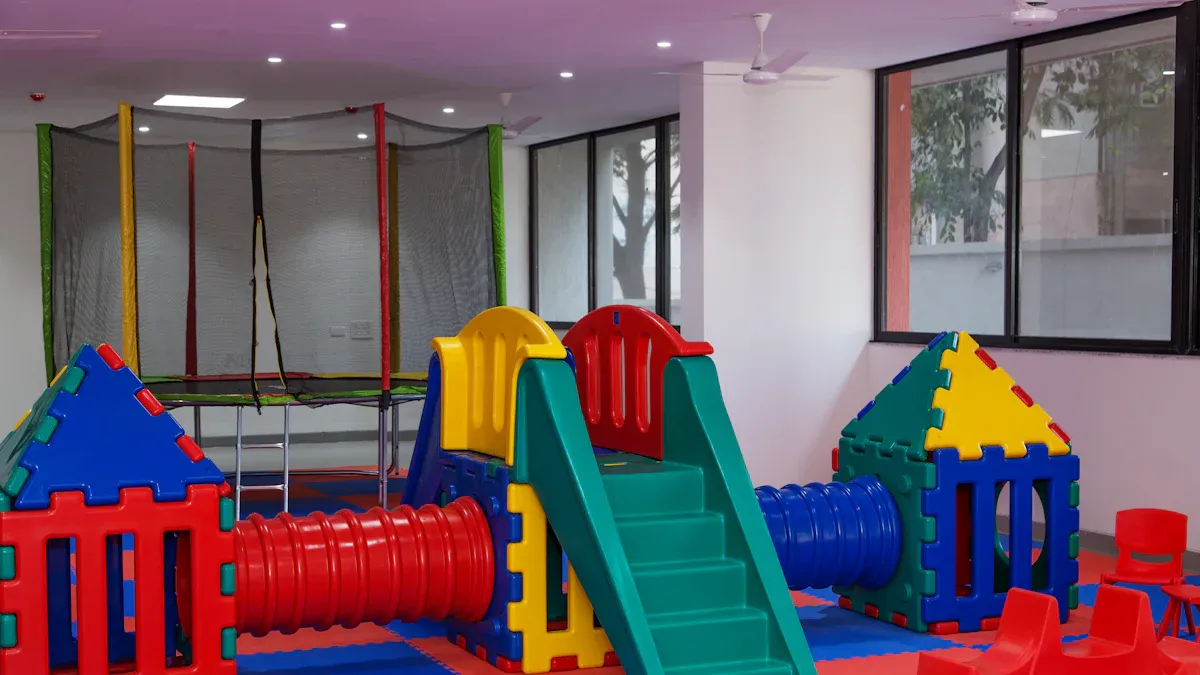
Indoor playgrounds provide children with a variety of equipment that targets gross motor skill development. These skills involve large muscle groups and support movements such as running, jumping, and climbing. Children engage with slides, tunnels, and climbing walls, which challenge their bodies and encourage active play.
• Slides: Promote leg strength and coordination as children climb and descend.
• Ball pits: Encourage jumping and landing, which strengthens core muscles.
• Obstacle courses: Develop agility and endurance through crawling, balancing, and leaping.
Physical activity in these settings helps children build muscle tone and improve cardiovascular health. Regular exposure to these activities supports healthy growth and prepares children for sports and other physical challenges. Indoor playgrounds offer a controlled environment where children can practice these movements safely.
Improving Balance and Coordination
Indoor playgrounds foster balance and coordination by offering equipment that requires precise movement and body control. Children walk across balance beams, hop on stepping stones, and navigate swinging bridges. These activities train the brain and body to work together, improving spatial awareness and reaction time.
Balance and coordination skills play a vital role in daily life. Children who master these abilities often excel in sports and physical education. Indoor playgrounds allow repeated practice, which leads to greater confidence and skill mastery. The variety of equipment ensures that children face new challenges and continue to progress in their physical development.
Social Skills Growth in Indoor Playgrounds
Fostering Teamwork and Communication
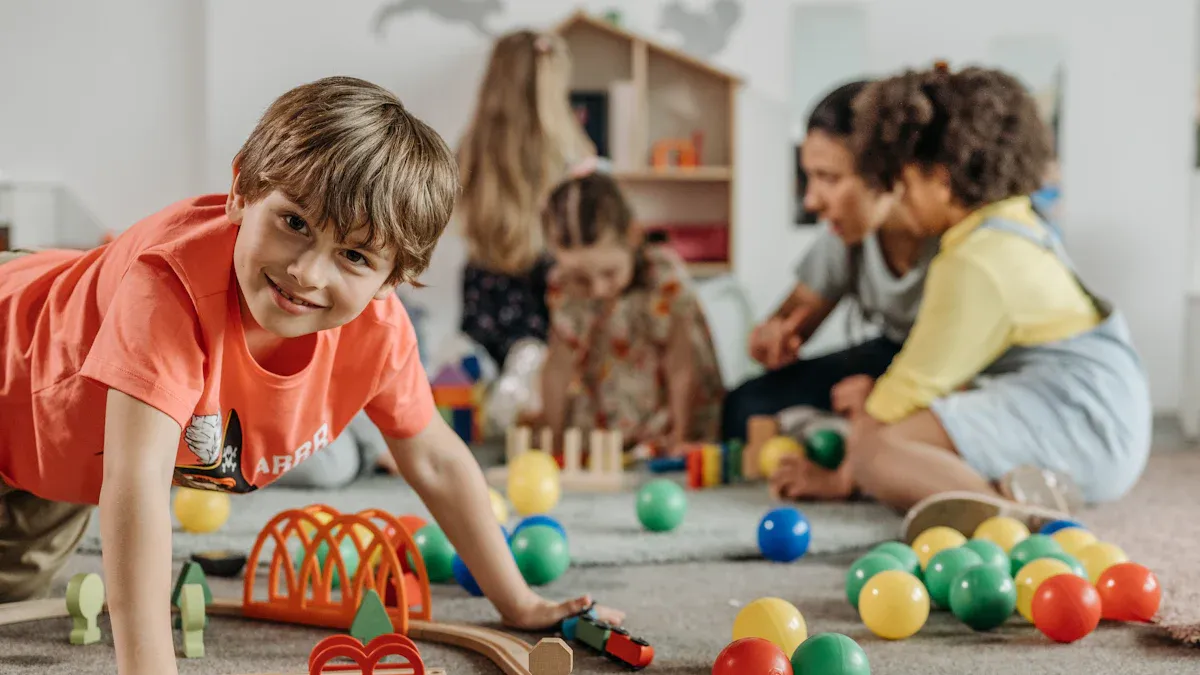
Indoor playgrounds create natural opportunities for children to work together. Group activities, such as building forts or navigating obstacle courses, require children to share ideas and listen to each other. These experiences help children develop essential teamwork and communication skills.
• Children learn to take turns and respect others’ opinions.
• They practice giving and receiving instructions.
• They solve problems together and celebrate shared successes.
Tip: Encourage children to join group games or challenges. These activities help them build trust and learn the value of cooperation.
Playground staff often organize team-based games that promote collaboration. Children who participate in these games develop stronger social bonds and learn how to express themselves clearly. These skills support positive relationships both inside and outside the playground.
Building Confidence Through Social Interaction
Social interaction in indoor playgrounds helps children build self-confidence. When children introduce themselves or invite others to play, they practice important social behaviors. Positive feedback from peers and adults boosts their self-esteem.
Children often face new situations in playgrounds, such as joining unfamiliar groups or trying new activities. Each successful interaction increases their confidence.
| Social Skill | How It Develops in Playgrounds |
|---|---|
| Introducing oneself | Meeting new friends during play |
| Resolving conflicts | Negotiating turns or game rules |
| Expressing feelings | Sharing excitement or disappointment |
Children who feel confident in social settings often perform better in school and other group environments. Indoor playgrounds provide a safe space for these important experiences.
Choosing the Right Soft Playground Supplier
Importance of Safety and Certification
Safety remains the top priority for any indoor playground project. A Soft Playground Supplier must follow strict safety standards and obtain proper certifications. These certifications show that the supplier uses non-toxic materials and designs equipment to prevent injuries. Many suppliers provide documentation that confirms compliance with international safety regulations.
Note: Parents and business owners should request safety certificates before purchasing playground equipment.
A reliable Soft Playground Supplier conducts regular inspections and updates equipment to meet current safety guidelines. They also train staff to install and maintain playgrounds correctly. Choosing a supplier with a strong safety record helps protect children and builds trust with families.
Customization and Design Capabilities
Customization allows playgrounds to fit unique spaces and meet specific needs. A Soft Playground Supplier offers design services that create layouts for different age groups and activity levels. Suppliers use advanced technology to develop interactive features and themed environments.
• Custom colors and shapes attract children and enhance play experiences.
• Flexible designs adapt to various room sizes and budgets.
• OEM/ODM options let clients add branding or special features.
A Soft Playground Supplier with strong design capabilities can deliver playgrounds that stand out in the market. They work closely with clients to turn ideas into reality and ensure every detail matches the project vision.
| Key Factor | Why It Matters |
|---|---|
| Safety Certification | Ensures child protection |
| Custom Design | Meets unique client needs |
| OEM/ODM | Supports branding |
| Timely Delivery | Keeps projects on schedule |
Working with a trusted Soft Playground Supplier brings peace of mind and guarantees a high-quality play environment.
Indoor playgrounds create valuable opportunities for children to strengthen social and physical skills in a secure environment.
Parents and caregivers select a Soft Playground Supplier to provide safe, engaging spaces for growth.
Visiting an indoor playground allows families to see firsthand how a Soft Playground Supplier supports child development.
FAQ
What age groups benefit most from indoor playgrounds?
Children ages 2 to 12 gain the most from indoor playgrounds. These environments support early development and provide age-appropriate challenges for physical and social growth.
How often should children visit indoor playgrounds for optimal development?
Experts recommend weekly visits. Regular play helps children build strength, coordination, and social skills while maintaining interest and excitement.
What safety certifications should a soft playground supplier provide?
A supplier should offer certificates like ASTM, EN, or CPSIA. These documents confirm compliance with international safety standards and ensure equipment quality.
Tip: Always request safety documentation before purchasing playground equipment.
| Certification | Purpose |
|---|---|
| ASTM | Ensures material safety |
| EN | Confirms design quality |
| CPSIA | Verifies child safety |
Post time: Sep-19-2025