


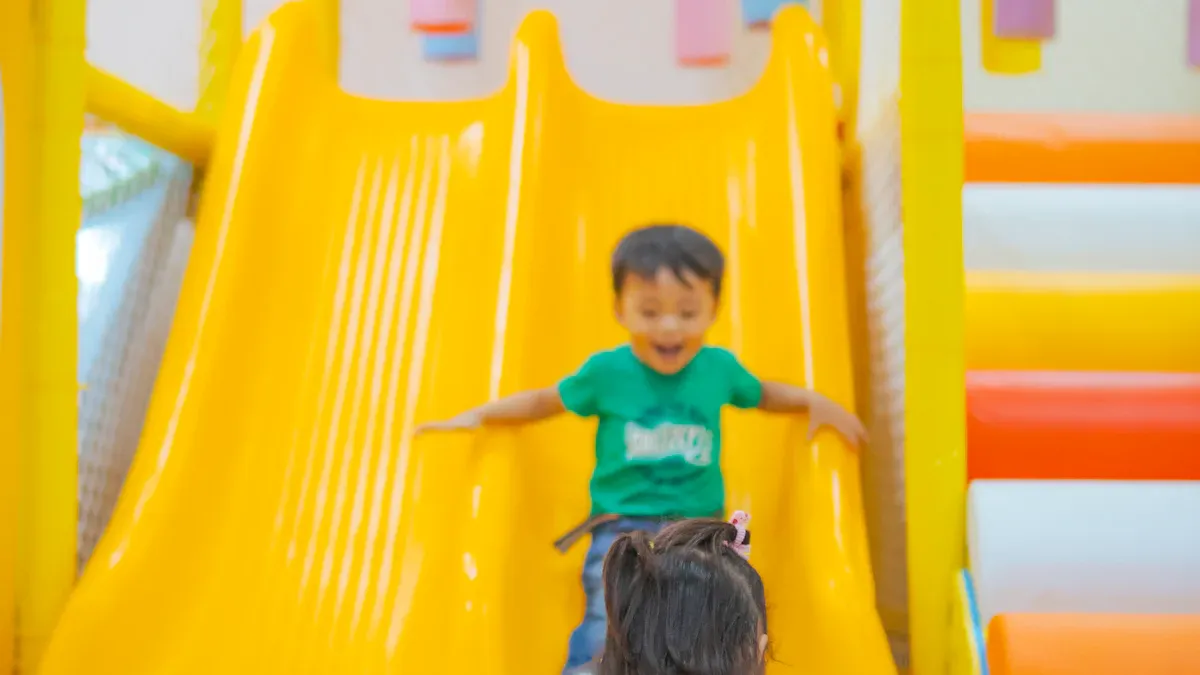
When you step into an Indoor Soft Playground, you’ll notice kids laughing, moving, and exploring. Playtime here does more than entertain. Check out these benefits:
| Benefit | Description |
|---|---|
| Socialization | Kids make friends and learn to share. |
| Physical Fitness | Activities boost strength and coordination. |
| Emotional Well-being | Play brings happiness and confidence. |
Physical Play at Indoor Soft Playground
Obstacle Course Races
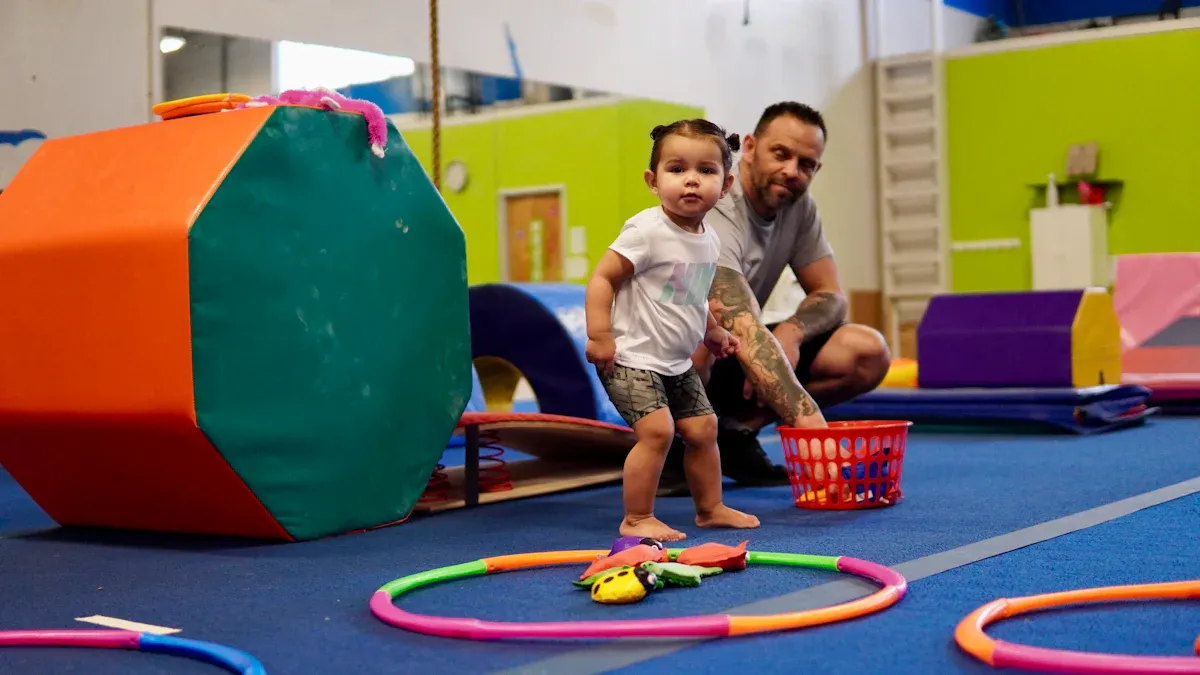
Obstacle course races turn every visit to an Indoor Soft Playground into an adventure. You can dash, climb, crawl, and jump through different stations. These races do more than just get your heart pumping. They help you build strength, coordination, and problem-solving skills. You might not even notice how much you’re learning because you’re having so much fun!
- Obstacle courses enhance gross motor skills through engaging physical activities.
- They promote strength, balance, coordination, and motor planning.
- Activities are fun, encouraging movement without the perception of hard work.
Here’s a quick look at how obstacle courses support your development:
| Activity | Supported Milestones |
|---|---|
| Obstacle course | Strength, coordination, problem-solving |
Climbing Challenges
Climbing walls and structures invite you to test your courage and agility. When you climb, you use your arms, legs, and core muscles. You also learn to plan your moves and judge distances. Safety always comes first. Staff members keep a close watch, and the equipment meets strict standards for durability and safety. Impact-absorbing floors and clear rules help everyone stay safe. Regular checks make sure everything works as it should.
Tip: Always look for age-appropriate climbing areas and follow posted safety rules.
Tunnel Crawling
Crawling through tunnels feels like a secret mission. You squeeze, wiggle, and move in new ways. This activity helps you develop spatial awareness and coordination. As you crawl, you learn how your body fits in space and how to move over, under, and around obstacles. Tunnel crawling also boosts sensory integration and problem-solving skills.
- Crawling through tunnels helps you build spatial awareness.
- You improve coordination and balance.
- Tunnel play supports sensory integration and fine motor skills.
Trampoline Jumping
Jumping on trampolines is pure joy. You bounce high, try new tricks, and feel weightless for a moment. Trampoline play at an Indoor Soft Playground is safer than many outdoor sports, but you should always follow the rules and jump safely. Injury rates are lower than in sports like football or rugby, especially when you use foam pits or inflatable bags.
| Activity Type | Injury Rate (per 1000 jumper hours) | 95% Confidence Interval |
|---|---|---|
| High-performance jumping | 2.11 | 1.66 to 2.56 |
| Inflatable bag or foam pit activity | 1.91 | 1.35 to 2.50 |
| Free jumping | 1.87 | 1.65 to 2.09 |
| Nonactive areas | 0.56 | 0.35 to 0.76 |
| Slam dunk | 0.58 | 0.37 to 0.80 |
Ball Pit Adventures
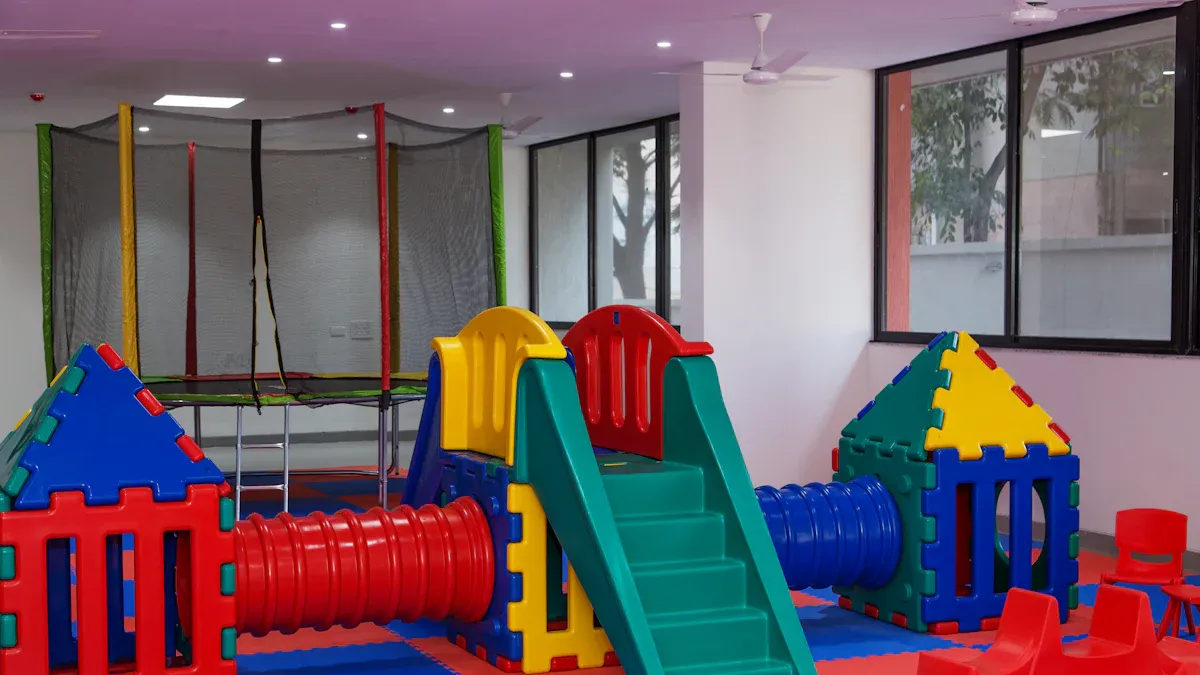
Ball pits are a classic favorite. You can dive, toss, and hide in a sea of colorful balls. This activity gives your senses a workout. Ball pits help you develop hand-eye coordination and get used to different textures and movements. For kids with sensory sensitivities, ball pits offer a safe way to explore new sensations and manage sensory overload.
- Ball pits provide sensory stimulation that aids in the development of hand and eye coordination.
- They help children with autism manage sensory overload by familiarizing them with multiple stimuli in a controlled environment.
- Ball pit therapy can reduce symptoms of hypersensitivity and hyposensitivity in children with autism.
Slide Races
Who can reach the bottom first? Slide races add excitement to every trip down the slide. You learn to take turns, wait for your friends, and cheer each other on. Sliding helps you build balance and confidence. The thrill of racing makes you want to try again and again.
Balance Beam Walks
Walking across a balance beam challenges your focus and stability. You use your arms to steady yourself and your core muscles to stay upright. Balance beam activities help you develop coordination, spatial awareness, and muscle strength.
- Engaging in balance beam activities helps children enhance their vestibular system.
- It promotes the development of coordination and spatial awareness.
- Strengthening core and limb muscles is essential for physical fitness and agility.
Foam Block Building
Foam blocks let you build anything you can imagine. You can stack, sort, and create towers or castles. This activity sharpens your problem-solving skills and boosts creativity. Working with blocks also improves your fine motor skills and introduces you to basic math and science ideas.
| Cognitive Skill | Description |
|---|---|
| Problem-solving | Children face challenges in building, enhancing critical thinking and strategy development. |
| Spatial awareness | Manipulating blocks improves understanding of shapes and sizes, crucial for math and science. |
| Creativity | Freedom in block play fosters imagination and innovative thinking. |
| Fine motor skills | Stacking and aligning blocks refines dexterity and hand-eye coordination. |
| Math and science concepts | Engaging in counting, sorting, and balancing introduces fundamental math and physics ideas. |
| Language and communication | Describing creations and negotiating with peers enhances vocabulary and articulation. |
| Social skills | Collaboration in block play teaches cooperation, sharing, and negotiation. |
| Persistence | Learning to cope with failure and try again builds resilience. |
| Planning | Deciding what and how to build encourages logical thinking and organization. |
| Self-confidence | Completing structures boosts self-esteem and encourages tackling new challenges. |
Monkey Bar Swings
Monkey bars challenge your upper body strength. You grip, swing, and move from bar to bar. This activity works your shoulders, arms, back, chest, and core muscles. Swinging across the bars also builds endurance and helps you feel more confident in your abilities.
- Engaging in monkey bars requires you to lift your body weight, which strengthens your shoulders, arms, back, and chest muscles.
- Swinging across monkey bars engages abdominal muscles, aiding in core strength development.
- The repetitive motion of swinging helps improve muscle endurance and overall upper body fitness.
Soft Mat Gymnastics
Soft mat gymnastics gives you a safe space to try new moves. You can practice animal walks, log rolls, and simple jumps. These exercises help you build coordination, balance, and flexibility. You also learn how to control your body and move with confidence.
- Animal Walks: Try bear walks, crab walks, frog jumps, and bunny hops to build strength and coordination.
- Log Rolls: Roll sideways to practice body control and balance.
- Balance Beam Basics: Walk on a beam or tape line to improve focus and stability.
- Obstacle Courses: Combine different skills at various stations.
- Tuck, Pike, and Straddle Jumps: Learn basic gymnastics shapes for flexibility and strength.
- Forward Rolls: Practice rolling forward to boost coordination and spatial awareness.
- Jumping Stations: Safely try different types of jumps.
- Parachute Games: Work together with friends to build teamwork and coordination.
You’ll find that every activity at an Indoor Soft Playground helps you grow stronger, braver, and more creative. Each visit brings new challenges and plenty of smiles.
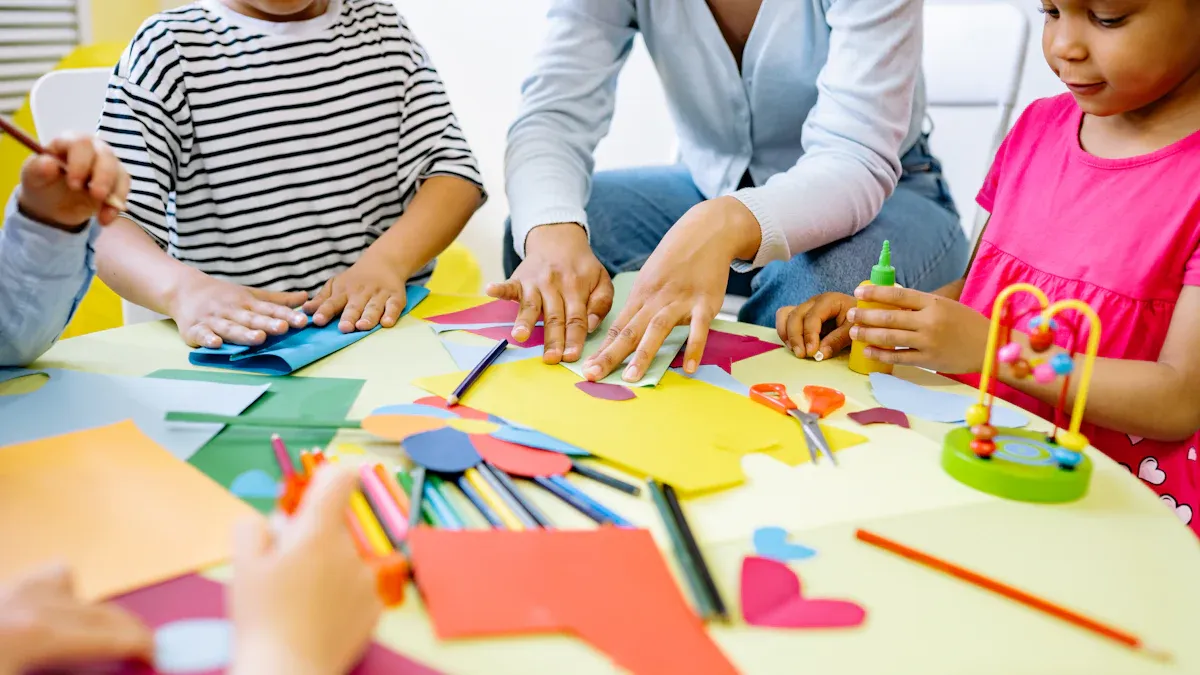
Imaginative Play in Indoor Soft Playground
Pretend Pirate Ship
Step onto the deck and become a fearless pirate captain. You can steer the ship, search for treasure, and shout out commands to your crew. When you play pirate, you practice teamwork and learn how to share ideas with friends. You also get to solve problems, like finding the best hiding spot for your treasure or planning a rescue mission.
- You learn to cooperate and negotiate with your crew.
- You practice empathy by taking on different roles.
- You build social skills as you work together to sail the ship.
Modern playgrounds often have themed zones that spark your imagination. You can turn a simple play structure into a pirate ship, a jungle, or even a space station. These settings let you act out stories and see ordinary things in new ways.
Tip: Try making up your own pirate language or secret handshake for your crew!
Space Explorer Missions
Blast off into space and explore new worlds. You can pretend to be an astronaut, build a rocket, or design a rover to travel across alien landscapes. Space missions challenge you to think creatively and solve problems.
- You analyze problems, like how to cross bumpy terrain or collect samples.
- You build and test solutions, such as making a sturdy rover.
- You evaluate your ideas and troubleshoot when things don’t work.
When you play as a space explorer, you learn to think like a scientist. You ask questions, try new things, and work with friends to complete your mission. This kind of play helps you become a better problem-solver and encourages you to dream big.
Jungle Safari Adventures
Imagine you’re deep in the jungle, searching for wild animals and hidden treasures. You can crawl through tunnels, swing on vines, and spot pretend creatures along the way. Jungle safari play lets you explore and move your body in new ways.
- You release energy and manage emotions through active play.
- You reduce stress and feel happier as you pretend to be an explorer.
- You boost creativity by inventing your own jungle stories.
Nature-themed play helps you feel calm and curious. You get to create your own adventures and discover new things every time you visit.
Castle Defense Games
Defend your castle from dragons or invaders! You and your friends can build walls, plan strategies, and work together to protect your kingdom. Castle defense games teach you how to be a good teammate.
| Evidence | Explanation |
|---|---|
| Castle Panic emphasizes collective success | You and your friends must work together to win. |
| Players share resources, trade cards, and coordinate attacks | You communicate and collaborate to defend the castle. |
| The gameplay encourages families to make decisions together | You practice making choices as a group. |
You need to talk with your team, share ideas, and decide what to do next. This helps you learn how to work with others and solve problems together.
Superhero Training
Put on your cape and become a superhero. You can run obstacle courses, rescue friends, or invent your own superpowers. Superhero training builds your confidence and helps you connect with others.
| Benefit | Description |
|---|---|
| Expand social communication skills | You practice talking and listening with friends. |
| Increase ability to initiate interactions | You feel braver about joining in. |
| Improve social awareness | You notice how others feel and act. |
| Increase regulation during interactions | You learn to control your emotions. |
Superhero play lets you try new things and feel proud of your achievements. Even if you’re shy, you can join in and make new friends.
- You experience success and leadership in a safe space.
- You release tension and feel happier.
- You learn to work with others and build friendships.
Underwater Treasure Hunt
Dive into an imaginary ocean and search for hidden gems. You can scoop, pour, and dig through soft materials to find treasures. Underwater treasure hunts make you curious and eager to explore.
- You use all your senses to discover new things.
- You develop fine motor skills by picking up small objects.
- You solve problems and think creatively as you search.
- You grow your language skills by describing what you find.
- You invent your own underwater worlds and stories.
This kind of play turns you into an explorer and helps you learn in a fun, hands-on way.
Animal Role Play
Pretend to be your favorite animal. You can crawl like a tiger, hop like a bunny, or slither like a snake. Animal role play helps you understand how animals move and behave.
- You use your imagination to create animal adventures.
- You practice empathy by thinking about how animals feel.
- You build coordination and balance as you move in new ways.
Try making animal sounds or inventing a story about your animal’s journey. You’ll have fun and learn at the same time.
Secret Hideout Building
Gather your friends and build a secret hideout. You can use foam blocks, tunnels, or climbing domes to create your own special space. Working together to build a hideout helps you learn how to cooperate and share ideas.
Geodesic climbing domes and other enclosed spaces encourage you to climb and explore with others. When you turn these spaces into secret hideouts, you create stories and adventures together. This shared experience helps you build friendships and learn how to work as a team.
Note: Secret hideouts are perfect for sharing secrets, planning adventures, or just relaxing with friends.
Imaginative play at an Indoor Soft Playground gives you endless ways to create, explore, and learn. Themed play areas inspire you to invent stories, solve problems, and work with others. Every visit brings a new adventure and helps you grow in exciting ways.
Group Games at Indoor Soft Playground
Tag Variations
Tag games always bring energy to the playground. You can try freeze tag, shadow tag, or even blob tag. These games help you move fast, dodge friends, and make quick decisions. Playing tag builds your strength and endurance. You also learn about boundaries and respect, which helps you get along with others.
- Tag games boost agility, speed, and awareness.
- You practice compassion and consent while playing.
Hide and Seek
Hide and seek never gets old. You can climb, crawl, and squeeze into clever hiding spots. This game makes you think about where to hide and how to find your friends. You use your brain and your body at the same time. Hide and seek helps you develop spatial awareness and strategic thinking.
Follow the Leader
In follow the leader, you copy the actions of the person in front. You might jump, crawl, or balance on a beam. This game encourages you to pay attention and try new moves. You learn to take turns and listen to others.
Simon Says
Simon Says is a classic. You listen for instructions and act only when you hear “Simon says.” This game sharpens your focus and helps you follow directions. You also get to laugh when someone makes a silly mistake.
Relay Races
Relay races get everyone moving together. You can run, crawl through tunnels, or pass a hula hoop. These races teach you how to work as a team. You learn to communicate, trust your teammates, and support each other.
- Relay games encourage teamwork and collaboration.
- You build social skills like taking turns and following instructions.
Team Obstacle Challenges
Team obstacle challenges let you solve problems with friends. You might build a bridge, climb over foam blocks, or crawl under nets. Working together helps you organize, make decisions, and cheer each other on.
Parachute Play
Parachute play is colorful and fun. You can wave the parachute, make a tent, or bounce balls on top. Everyone holds a handle and works together. This game builds cooperation and helps you feel included.
Musical Mats
Musical mats turn movement into a game. You dance or walk around mats while music plays. When the music stops, you find a mat to stand on. This game mixes music, movement, and quick thinking. You learn to react fast and enjoy friendly competition.
Classic games like Hide and Seek, Simon Says, and relay races transform any Indoor Soft Playground into a fun zone. You get to move, laugh, and build friendships every time you play.
Creative Challenges in Indoor Soft Playground
Build a Fort
Grab some foam blocks, mats, or tunnels and start building your own fort. You can create a cozy hideaway or a giant castle. When you build a fort, you use your imagination and learn how to solve problems. You figure out how to make your walls stand tall and your roof stay up. Working with friends makes it even more fun.
Tip: Try adding a secret entrance or a lookout tower for extra adventure!
Foam Block Sculptures
Stack, balance, and arrange foam blocks to make wild sculptures. Maybe you want to build a robot, a rocket, or a funny animal. This activity helps you practice planning and thinking ahead. You also get to see how different shapes fit together.
Color Sorting Games
Turn playtime into a color challenge. Gather balls, blocks, or mats and sort them by color. You can race against the clock or compete with friends. Sorting games help you notice details and improve your focus.
Pattern Matching
Look for repeating patterns in the playground. You might spot stripes on mats or colored tiles. Try to copy these patterns using foam blocks or balls. Pattern matching boosts your memory and sharpens your observation skills.
Shape Hunts
Go on a shape hunt! Search for circles, squares, triangles, and more around the playground. You can make a list or draw what you find. Shape hunts help you learn about geometry in a hands-on way.
Puzzle Races
Challenge yourself with a puzzle race. Work alone or with a friend to solve a puzzle as fast as you can. Puzzle games boost your critical thinking and help you become a better problem-solver.
- Puzzle games enhance critical thinking.
- Sensory play stations promote cognitive growth.
- Problem-solving activities develop spatial awareness.
Stack the Blocks
How high can you stack the blocks before they tumble? Stacking games test your patience and balance. You learn about gravity and stability while having a blast. Try to beat your own record or work as a team to build the tallest tower.
Sensory Activities at Indoor Soft Playground
Texture Exploration
You can touch and feel all sorts of surfaces at an indoor soft playground. Some areas have bumpy mats, squishy foam, or smooth slides. When you run your hands over these textures, your brain learns to process new sensations. This helps you understand your body and the world around you. Kids with sensory processing disorders often find these activities calming or exciting, depending on what they need.
- Soft sensory play areas give you a safe place to explore your senses.
- You can try different textures and learn how your body reacts.
Sensory Ball Play
Grab a handful of sensory balls and start exploring. Some balls feel soft, others have bumps or ridges. You can squeeze, roll, or toss them. Sensory ball play helps you build hand strength and coordination. It also lets you practice focusing on how things feel, which is great for kids who need help with sensory input.
Light and Sound Corners
Step into a corner filled with gentle lights and soothing sounds. You might see glowing panels or hear calming music. These spaces help you relax and feel safe. If you get overwhelmed, you can take a break here and reset your senses.
Tip: Try closing your eyes and just listening to the sounds. Notice how your body feels.
Tactile Pathways
Walk, crawl, or hop along a tactile pathway. Each step brings a new feeling under your feet—maybe soft foam, bumpy pads, or cool rubber. Tactile pathways help you balance and become more aware of your body. They also make moving around the playground more fun.
Soft Object Sorting
Pick up soft objects like beanbags or plush shapes. Sort them by color, size, or texture. This activity helps you focus and organize your thoughts. Sorting games can be calming and give you a sense of control.
- Sensory play supports balance, body awareness, and overall development.
- Soft play areas can be tailored to meet your needs, whether you want to feel calm or get energized.
Tips for Parents and Caregivers at Indoor Soft Playground
Safety First
Your child’s safety comes first every time you visit an Indoor Soft Playground. You can keep playtime safe by following these simple steps:
- Watch your child closely, especially in busy areas.
- Check that equipment looks clean and well-maintained.
- Choose play zones that match your child’s age.
- Look for clear safety signs around the playground.
- Ask about trained staff who supervise play.
A safe Indoor Soft Playground isn’t just about bright colors and fun slides. You want to see protective surfaces near climbing areas and slides. These features help prevent bumps and bruises.
- Make sure playground materials meet safety standards.
- Notice if equipment gets regular inspections.
- Look for soft mats and enough space between play structures.
Encouraging Participation
You can help your child join in and try new things. Ask questions like, “What do you want to play today?” Cheer them on when they try something new. If your child feels shy, join them for the first few minutes. Your support makes a big difference.
Balancing Free Play and Structure
Kids love freedom, but they also need a little structure. Let your child explore on their own, then suggest a group game or a creative challenge. You can set a timer for each activity to keep things fresh. This balance helps your child learn and have fun.
Making Play Inclusive
Every child deserves to feel welcome. Invite others to join your child’s game. Encourage sharing and teamwork. If you see someone left out, help them join in. Inclusive play builds friendships and teaches kindness.
Planning Snack and Rest Breaks
Playtime uses lots of energy. Pack healthy snacks and water. Plan short breaks so your child can rest and recharge. A quick snack or a few minutes of quiet time helps everyone enjoy the playground longer.
You’ll find so many ways for kids to grow and have fun at an Indoor Soft Playground. These spaces help children manage emotions, build friendships, and express themselves.
| Evidence Type | Description |
|---|---|
| Symbolic Play | Linked with language development and emotional expression, enhancing cognitive and social skills. |
| Imaginative Play Structures | Facilitate exploration of various roles and scenarios, promoting social interaction. |
FAQ
What should you bring to an indoor soft playground?
You should bring socks, a water bottle, and a healthy snack. Some places require grip socks. Check the rules before you go.
Can you leave your child alone at the playground?
Most playgrounds want you to stay and watch your child. Staff supervise, but you should always keep an eye on your child for safety.
How do you keep playtime safe for everyone?
Always follow the posted rules. Remind your child to take turns and be gentle. If you see unsafe behavior, let staff know right away.
Post time: Sep-01-2025