


Determining the appropriate length for a playground slide involves a nuanced understanding of safety standards, user demographics, and spatial constraints. This guide delves into these considerations, offering insights into optimal slide dimensions and cost factors, while highlighting exemplary products from Oplay Solution.
Understanding Slide Length: Safety and Standards
The length of a playground slide is intrinsically linked to its height and angle of descent. Safety guidelines stipulate that for slides up to 4 feet in height, the exit region should be no more than 11 inches above the protective surfacing. For slides exceeding 4 feet, the exit height should range between 7 and 15 inches above the surfacing . These specifications ensure a safe and comfortable landing for children.
The incline angle also plays a pivotal role. For toddlers, the average incline should not exceed 24°, maintaining a gentle slope that minimizes the risk of accidents . For older children, steeper angles can be introduced, provided they align with safety standards.
Tailoring Slide Length to Age Groups
Toddlers (Ages 1–3)
For this age group, slides should prioritize safety and gentle play. A slide height of approximately 2 to 3 feet, with a corresponding length of 3 to 5 feet, is recommended. The incline should be mild, ensuring a slow and controlled descent.
Preschoolers (Ages 4–5)
Children in this bracket can handle slightly taller slides, ranging from 4 to 5 feet in height. This translates to slide lengths of about 6 to 8 feet. The incline can be moderately steeper, introducing a bit more excitement while still adhering to safety norms.
School-Age Children (Ages 6–12)
Older children seek more thrilling experiences. Slides for this group can range from 6 to 8 feet in height, with lengths extending up to 12 feet or more. Steeper inclines are acceptable, provided they are designed with safety features like side rails and proper surfacing at the exit.
Factors Influencing Slide Length
Available Space: The physical dimensions of the playground area will dictate the maximum feasible slide length.
User Demographics: Understanding the primary age group of users ensures the slide is appropriately sized for their developmental stage.
Safety Regulations: Compliance with local and international safety standards is non-negotiable. These regulations often specify maximum heights and required safety features.
Material and Design: The choice of materials and the slide's design can influence the necessary length to achieve a safe and enjoyable experience.
Exemplary Slide Options from Oplay Solution
Oplay Solution offers a range of innovative slides catering to various age groups and playground settings.
Volcano Slide
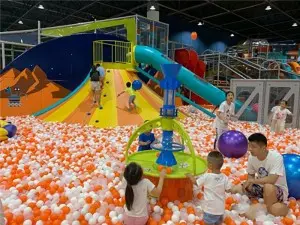
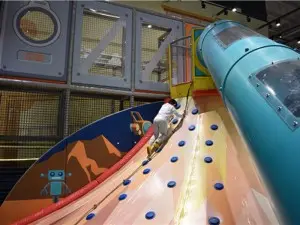
The Volcano Slide is a dynamic addition to any indoor playground. With dimensions of 8.5’ and 11.5’, it caters to children aged 3 and above. Its design encourages climbing, promoting physical activity and coordination. The slide's structure allows for customization, accommodating different themes and branding needs.
Donut Slide
The Donut Slide offers a unique sliding experience, where children descend on a tire-shaped object, mimicking the sensation of snow tubing. This slide is adaptable to various ceiling heights, making it suitable for diverse indoor settings. Its engaging design ensures repeated use, enhancing the play value of any playground.

Conclusion
Determining the appropriate length for a playground slide is a multifaceted decision, influenced by safety standards, user age groups, spatial constraints, and budget considerations. By understanding these factors and exploring quality options like those offered by Oplay Solution, one can ensure the creation of a safe, engaging, and enjoyable play environment for children.
Post time: May-23-2025